Summer heat in Reading, PA doesn’t wait for a slow air conditioner to catch up. When you set the thermostat low and the air coming out still feels warm, something in your system isn’t working the way it should. This is one of the most common complaints homeowners have during peak cooling season, and the good news is that most causes are easy to identify once you know what to look for.
This guide walks through the most frequent reasons an AC stops cooling properly, what you can check yourself, and when it’s time to call a professional. Whether the issue is a small fix or a sign of a bigger problem, understanding the cause helps you make the right decision before the heat gets worse.
Why Your AC Isn’t Cooling the Way It Should
An air conditioner is a system of connected parts. Refrigerant, airflow, electrical components, and controls all have to work together. When one part fails or gets dirty, the whole system slows down or stops cooling altogether. Homeowners often assume the unit is broken beyond repair, but in many cases, the fix is simple and affordable.
Here are the most common reasons homeowners search for help when their air conditioner isn’t cooling.
1. Dirty or Clogged Air Filter
A dirty air filter is the single most common reason for weak or warm airflow. When the filter is clogged with dust and debris, air can’t move through the system properly. This restricts airflow across the evaporator coil, which can cause the coil to freeze and stop the cooling process entirely.
Fix: Check the filter monthly during peak season and replace it every 60 to 90 days, or sooner if you have pets or allergies in the home. This is one of the easiest maintenance steps and often solves the problem on its own.
2. Thermostat Settings or Malfunction
Sometimes the unit itself is fine, but the thermostat isn’t communicating properly with the system. Incorrect settings, dead batteries, or a miscalibrated sensor can all cause the AC to run without actually cooling the home.
Fix: Confirm the thermostat is set to “cool” and the temperature is below the current room temperature. Replace batteries if it’s battery powered. If the thermostat still isn’t responding correctly, it may need to be repaired or replaced by a technician.
3. Low Refrigerant Levels
Refrigerant absorbs heat from the air inside your home and releases it outside. If the system is low on refrigerant due to a leak, it can’t absorb enough heat, and the air coming from your vents will feel warm or barely cool at all.
Fix: Refrigerant should never need to be “topped off” repeatedly. A drop in refrigerant almost always points to a leak, which requires a licensed technician to locate, repair, and properly recharge the system.
4. Frozen Evaporator Coil
A frozen coil is a common result of restricted airflow, whether from a dirty filter, blocked vents, or low refrigerant. Once ice builds up on the coil, the system can’t transfer heat efficiently, and cooling output drops sharply.
Fix: Turn off the system and let the coil thaw completely before running it again. Address the root cause, whether that’s a filter change or a refrigerant check, so the problem doesn’t return.
5. Dirty Condenser Coil or Blocked Outdoor Unit
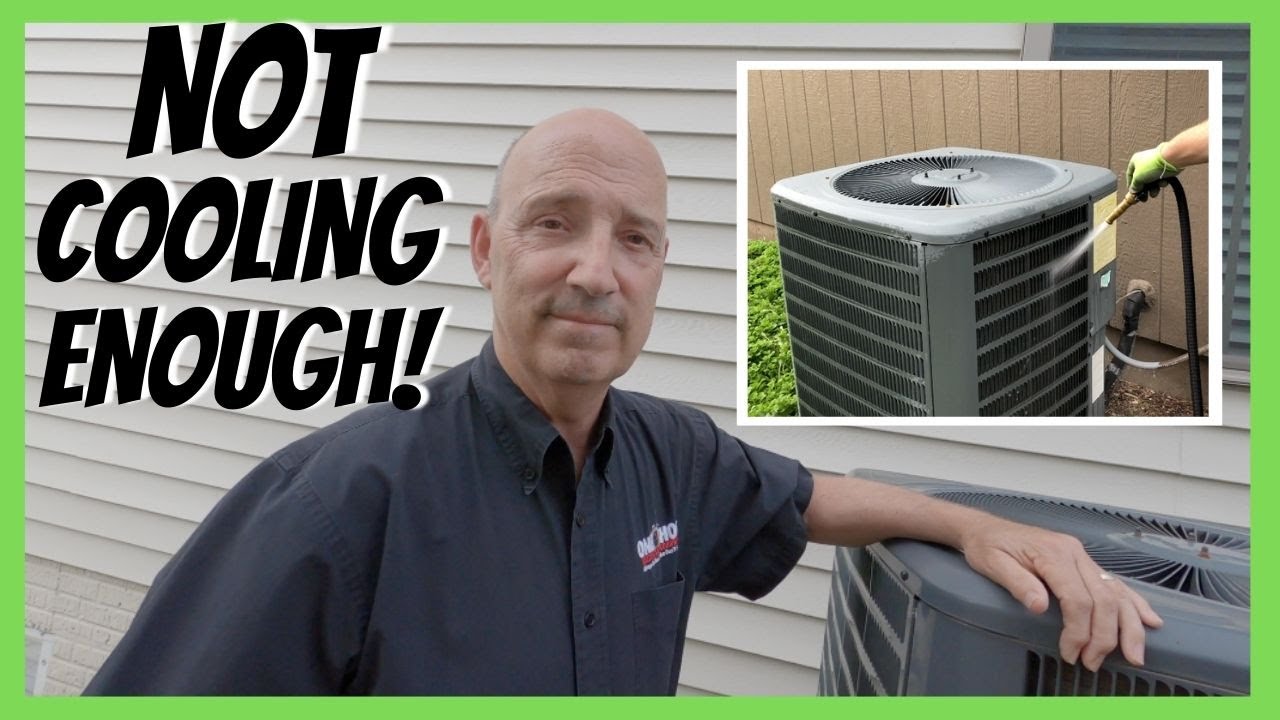
The outdoor condenser unit releases the heat pulled from inside your home. If it’s covered in dirt, leaves, grass clippings, or surrounded by overgrown plants, it can’t release heat properly, which reduces overall cooling performance.
Fix: Clear at least two feet of space around the outdoor unit and gently hose off visible debris from the coil fins. Avoid using a pressure washer, as it can bend the delicate fins.
6. Electrical or Capacitor Issues
Capacitors help start and run the compressor and fan motors. When a capacitor weakens or fails, the system may run intermittently, struggle to start, or stop cooling altogether even though it still powers on.
Fix: Electrical components should only be tested and replaced by a licensed technician, since this involves working with high-voltage parts.
7. Ductwork Leaks or Blockages
Even a perfectly working AC unit can fail to cool a home if the ductwork carrying that cool air has leaks, gaps, or blockages. Air escaping into a wall cavity or attic space never reaches the living areas it’s meant to cool.
Fix: A ductwork inspection can identify leaks, disconnected sections, or blocked runs that are pulling cooling capacity away from your rooms.
8. Oversized or Undersized System
If an AC unit was installed with the wrong capacity for the home’s square footage, it may run constantly without ever reaching the set temperature, or it may cool too quickly without properly removing humidity, leaving the air feeling damp and warm.
Fix: A load calculation from a qualified technician determines whether the current system matches your home’s actual cooling needs.
Quick Comparison: Common Causes and What They Mean
| Cause | Common Sign | DIY or Professional Fix |
|---|---|---|
| Dirty air filter | Weak airflow, warm air | DIY – replace filter |
| Thermostat issue | System runs but doesn’t cool | DIY check, professional if unresolved |
| Low refrigerant | Warm air, hissing sound | Professional only |
| Frozen evaporator coil | Ice on indoor unit, no cooling | DIY thaw, professional for root cause |
| Dirty condenser coil | Reduced cooling, hot outdoor unit | DIY cleaning |
| Capacitor or electrical fault | Unit won’t start or stops randomly | Professional only |
| Ductwork leaks | Uneven cooling between rooms | Professional inspection |
| Wrong system size | Constant running, humid air | Professional evaluation |
When to Call a Professional
Some causes of an AC not cooling properly are safe to check yourself, like the air filter, thermostat settings, or outdoor unit clearance. Others, like refrigerant leaks, electrical faults, or ductwork problems, need a trained technician with the right tools and safety knowledge.
If you’ve already checked the basics and your air conditioner still isn’t cooling the home, it’s usually a sign of a deeper issue that needs a proper inspection. For homeowners in Reading, PA, our air conditioner services team can diagnose the exact cause and get your system back to full cooling capacity, often the same day.
Preventing Future Cooling Problems
Regular maintenance is the best way to avoid an AC that suddenly stops cooling in the middle of a heat wave. A yearly tune-up before cooling season starts can catch small issues, like a weak capacitor or a slightly low refrigerant charge, before they turn into a full system failure.
A few habits that help:
- Replace or clean the air filter on a consistent schedule
- Keep the outdoor unit clear of debris and vegetation
- Schedule an annual inspection before peak summer heat
- Address strange noises or smells right away instead of waiting
Final Thoughts
An air conditioner that isn’t cooling properly is frustrating, especially during the hottest part of the year, but most causes fall into a handful of common categories. Airflow restrictions, refrigerant issues, electrical faults, and ductwork problems each have their own signs and their own fix. Knowing what to check first can save you time and help you decide whether it’s a simple fix or something that needs a technician’s attention.
If your system still isn’t cooling after checking the basics, don’t wait for it to get worse in the heat. Heck’s Heating and Cooling LLC can inspect, diagnose, and repair the issue so your home stays comfortable all season long.